
Why Nonprofits Rarely Invest Big in Their Grant Writers And Why That Should Change

A pattern shows up again and again in conversations across the sector. An organization will pay a consultant $15,000 to $20,000 to write a single federal grant. That same organization will not spend a fraction of that amount to help a staff member learn to write federal grants themselves. The one-time expense feels normal. The investment in lasting capacity feels like a stretch.
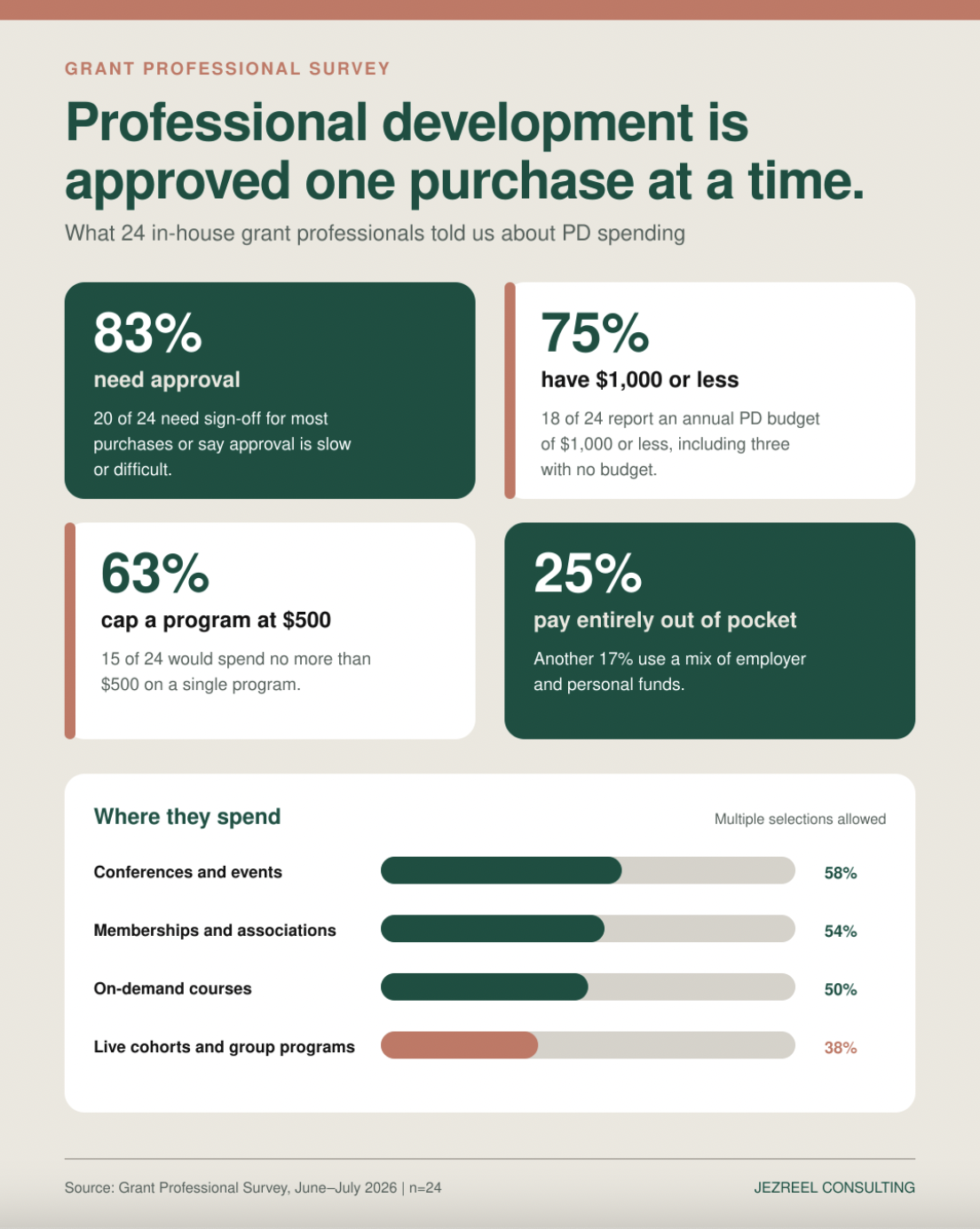
That math deserves a closer look, because the second option often builds far more value than the first.
The Spending Pattern
Nonprofits routinely fund the deliverable but not the capability. Paying for a grant to be written solves today's deadline. It does nothing for next year's application, or the one after that. The knowledge walks out the door with the consultant, and the organization starts from zero the next time a strong opportunity appears.
Building the skill in-house changes that. A staff member who learns to write competitive federal grants can do it again and again, across funders and program areas, for a fraction of the cost of a single outsourced proposal. The value compounds.
Why the Investment Gets Skipped
The reluctance usually comes down to how organizations categorize the two expenses. A written grant is a project cost tied to a specific opportunity, so it is easy to approve. Training is treated as professional development, which feels like it is the first line cut when budgets tighten.
I also believe grant professionals are often undervalued inside the organizations they serve. Their work touches programs, finance, compliance, and strategy all at once, yet they are frequently treated as entry level professionals. Even when their portfolios are larger than the major gift officer’s, they are paid less. Few organizations set aside real money to develop the person responsible for bringing in a large share of their revenue.
What Investing in Grant Capacity Looks Like
I’m going to go out on a limb and say that building in-house grant capacity is one of the highest-return moves a mid-sized nonprofit can make. It does not require a new hire or a large budget line. It requires treating grant skill as an asset worth developing.
A grounded approach can include:
Funding real training for the person who writes your grants, sized to the federal or foundation work you actually pursue.
Giving that person time to learn, not just deadlines to hit.
Considering mentoring and coaching as legitimate forms of professional development for grant professionals.
Bringing them into program design and budget conversations early, so proposals are built on fundable ideas from the start.
Removing barriers to accessing existing professional development funds.
When an organization invests in their grant professional, a single funded grant can return the cost of the training many times over. One competitive award often offsets years of skill-building.
One of the complaints I hear frequently from development directors is that their grant writer just left, again, after only 18 months on the job. Proven techniques to retain professionals longer? Professional development and a pathway to career advancement. No one wants to be stuck in low-pay work without a path to more skills and advancement.
The Confidence That Comes With Capacity
Organizations that build their own grant capacity gain something beyond savings. They gain independence. They stop being at the mercy of consultant availability during a tight application window. They can pursue an opportunity that appears with three weeks' notice. They approach federal funding from readiness rather than scrambling because they have someone in-house working consistently on a federal grants strategy.
A staff member who understands how competitive proposals come together, who can speak the language of federal funding, and who sits at the table when programs are designed becomes a source of stability for the whole organization. Grant capacity built in-house is capacity that stays.
There is a place for consultants, including for the most complex or highest-stakes applications. Or for capacity spillover. Bringing in outside expertise and building internal skill are not at odds. The organizations that do both, that invest in their people while also knowing when to call for backup, are the ones that build durable, diversified funding over time.
A Better Question for Your Next Budget Cycle
Instead of asking only what a grant will cost to write, ask what it would take to build the skill in-house. Compare the one-time cost of outsourcing a proposal to the lasting value of a staff member who can write many. For most mid-sized organizations, the investment in capacity pays for itself faster than expected.
Your organization already does work worth funding. Developing the people who translate that work into competitive proposals is one of the surest ways to keep that funding coming, and to build it on your own terms.
If you're weighing how to build grant capacity inside your team, that is exactly the kind of readiness worth planning for now.
Ready to strengthen your federal grant writing practice? www.federalgrantsaccelerator.com